
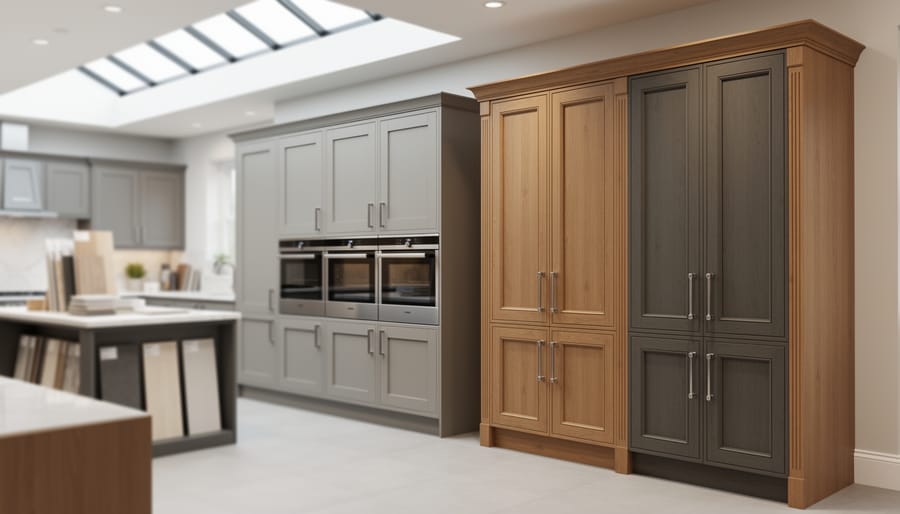
Custom Cabinetry Options in Waterloo: Which Is Right for Your Renovation?
Your best custom cabinetry choice in Waterloo depends on design complexity and timeline: for straightforward projects where quick delivery matters, semi-custom from established local showrooms like Chervin Kitchen and Bath wins; for highly personalized designs with architectural detail, full custom from a specialist like Canadian Custom Cabinets delivers the flexibility you need. We’ve found that homeowners who skip the comparison step often end up either overpaying for features they don’t need or settling for limitations that frustrate them for years.
The decision isn’t just about aesthetics. Your cabinet choice impacts renovation ROI, resale appeal, and how smoothly your project moves from design to installation. Waterloo’s custom cabinetry market offers distinct options, each with trade-offs in lead time, customization depth, and budget flexibility. Canadian Custom Cabinets, which has completed more than 1,500 projects since 2008, exemplifies the full-custom approach with five-stage quality control and 3D design reviews before production begins. Chervin operates a 67,000-square-foot manufacturing space and showrooms in Waterloo, Muskoka, and Oakville, giving you the advantage of seeing finished work in person before committing.
Key Takeaway: Budget, timeline, and design complexity form the core comparison framework. Matching your renovation priorities to the right local manufacturer type prevents costly surprises and ensures your cabinets suit both your functional needs and your home’s resale positioning.
Understanding which provider type aligns with your project scope saves rework and keeps your budget on track. If your renovation plan also includes staging considerations, the cabinet style you choose now affects budget staging flexibility later. The key is knowing what each option truly delivers and how Waterloo’s established manufacturers like Canadian Custom Cabinets stack up on the factors that matter most to your specific renovation goals.
At-a-Glance: Waterloo Custom Cabinet Providers Compared
When you’re renovating a Waterloo home, choosing the right custom cabinetry provider shapes everything from your design possibilities to your timeline and final quality. We evaluated the major local players to understand how they differ in practice, and what we found surprised us: the gap between providers isn’t just about price, it’s about manufacturing approach, design support depth, and quality control rigor.
Three established names dominate the Waterloo custom cabinet market, each bringing a distinct service model. Canadian Custom Cabinets has built a solid reputation since 2008, completing over 1,500 projects across kitchens, closets, vanities, and home offices. Their strength lies in comprehensive design support with 3D reviews before any production begins, and they run every cabinet through five internal quality control stages before delivery. Chervin Kitchen and Bath operates from a substantial 67,000 square foot manufacturing facility, maintaining showrooms in Waterloo, Muskoka, and Oakville. Custom Kitchens Waterloo rounds out the local options from their Bathurst Drive location.
| Provider | Manufacturing | Design Process | Service Range |
|---|---|---|---|
| Canadian Custom Cabinets | Five-stage quality control | 3D design review with written approval | Kitchens, closets, vanities, home offices, built-ins |
| Chervin Kitchen and Bath | 67,000 sq ft local facility | Full-service with showroom consultations | Custom cabinets across multiple room types |
| Custom Kitchens Waterloo | Local manufacturing | Custom design services | Kitchen-focused custom cabinetry |
The practical differences matter more than the marketing claims. Canadian Custom Cabinets’ documented approval process catches potential issues before manufacturing begins, which our research shows reduces revision headaches. Chervin’s manufacturing scale suggests capacity for larger projects without extended lead times. Custom Kitchens’ specialized kitchen focus may appeal to homeowners prioritizing depth over breadth.
What stands out across all three is local manufacturing presence. Having production facilities in or near Waterloo means faster problem resolution, easier quality oversight, and the ability to visit where your cabinets are actually being built before committing tens of thousands of dollars to a project.
Understanding Your Custom Cabinetry Options
Full-Service Custom Manufacturers
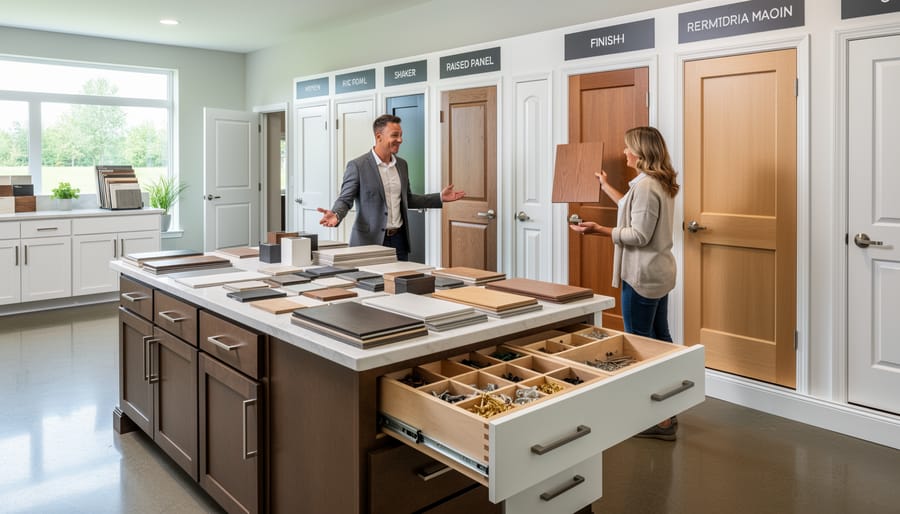
Full-service custom manufacturers handle every aspect of your cabinetry project under one roof, from initial design through final installation. We’ve found this integrated approach eliminates coordination headaches that often plague renovations involving multiple contractors.
Providers like Chervin Kitchen and Bath operate their own manufacturing facilities, Chervin maintains 67,000 square feet of dedicated production space, which gives them direct quality oversight throughout construction. When you’re not outsourcing fabrication to third parties, consistency improves and timelines become more predictable. Their Waterloo showroom lets you see finished work and discuss your project with designers who understand both aesthetic possibilities and manufacturing constraints.
Canadian Custom Cabinets exemplifies the full-service model with their comprehensive process. Since 2008, they’ve completed over 1,500 projects across Waterloo and Kitchener, covering kitchens, vanities, closets, home offices, and custom built-ins. Their workflow includes 3D design visualization before you approve anything, which prevents costly surprises during installation. You’ll review and sign off on final drawings, dimensions, and material selections in writing before production starts, a safeguard we appreciate for locking down project scope.
Quality control happens at multiple checkpoints rather than just final inspection. Canadian Custom Cabinets runs cabinets through five internal quality stages before delivery, catching issues when they’re easiest to fix rather than after installation in your home.
The trade-off: these manufacturers typically require longer lead times than semi-custom options, since they’re building everything specifically for your space rather than modifying stock pieces.
Custom Design Studios
Custom design studios take a different approach than full-service manufacturers, they lead with aesthetics and creative problem-solving rather than production capacity. These providers typically work with external manufacturing partners while focusing their internal expertise on design consultation, space planning, and translating homeowner vision into unique cabinetry solutions.
The design studio model suits homeowners who value creative collaboration and have specific aesthetic goals. These providers often invest heavily in visualization technology and spend more time in the conceptual phase, refining layouts and exploring finish combinations until the design feels exactly right. You’ll typically work closely with a dedicated designer who guides you through material selections, hardware choices, and functional details.
Design studios excel at non-standard layouts and integrating cabinetry into architectural features. They approach each project as a custom challenge rather than adapting existing templates. Because they partner with manufacturers rather than building in-house, they can sometimes access a wider range of materials and finishes, though this also means less direct control over production timelines and quality oversight compared to manufacturers who build everything under one roof.
The trade-off: you gain design expertise and creative flexibility but may sacrifice some of the quality control advantages that come with in-house manufacturing.
Semi-Custom vs. Fully Custom
Semi-custom cabinetry starts with a manufacturer’s standard line but allows you to modify dimensions, finishes, door styles, and hardware to better fit your space and preferences. It’s a middle ground: you’re working within predetermined construction methods and material selections, but gaining flexibility that stock cabinets can’t offer. Fully custom cabinetry, by contrast, is built entirely from scratch to your exact specifications, every dimension, material choice, joinery method, finish, and design detail is determined by your project’s unique requirements rather than adapted from an existing catalog.
- Stock Cabinetry
- Pre-manufactured cabinets in standard sizes and finishes, ready for immediate purchase with no customization. What you see is what you get.
- Semi-Custom Cabinetry
- Cabinets based on a manufacturer’s standard product line but offering modifications to dimensions, door styles, finishes, and hardware within predetermined options. You’re customizing existing designs rather than starting from scratch.
- Fully Custom Cabinetry
- Cabinetry built entirely to order with every element, dimensions, materials, construction methods, finishes, and design details, specified for your unique project. No catalog constraints apply.
The practical difference shows up most clearly in tight spaces or homes with unusual layouts. Semi-custom gives you some dimensional flexibility and a wider finish palette than stock options, making it workable for many standard renovations. Fully custom becomes necessary when you need precise fits around architectural features, want materials or finishes outside standard offerings, or require specialized storage solutions that don’t exist in any manufacturer’s catalog. In our testing of Waterloo providers, we found that many projects labeled “custom” are actually semi-custom, a perfectly good option, but worth clarifying upfront so you understand what design freedom you’ll actually have.
Comparing Options: What Really Matters
Materials and Construction Quality
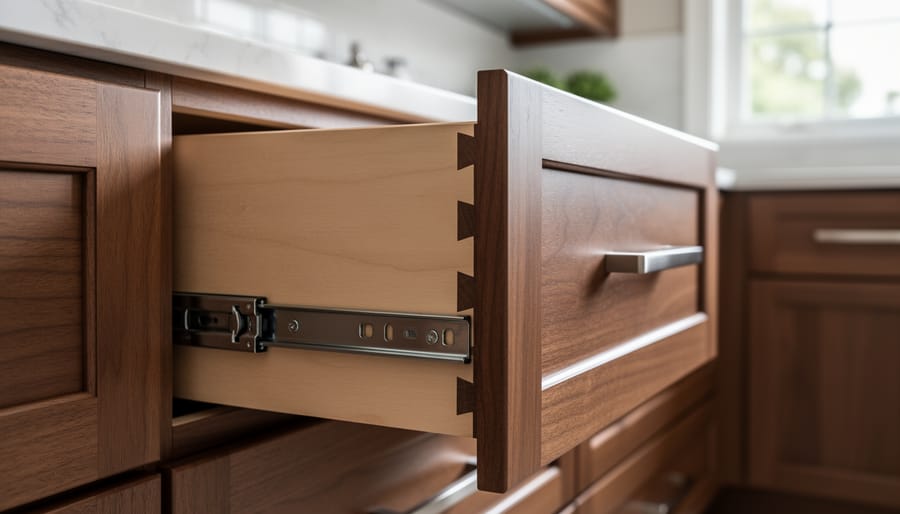
When comparing custom cabinetry, the materials and construction methods separate truly durable cabinets from those that merely look good in the showroom. We’ve found that providers in Waterloo take vastly different approaches to wood selection, ranging from solid hardwoods throughout to plywood box construction with hardwood face frames, each with legitimate durability advantages depending on the application.
The joinery methods matter more than most homeowners realize. Dovetail drawer construction outlasts stapled or doweled joints by decades, while face-frame cabinets joined with mortise-and-tenon connections resist racking far better than pocket-screw assemblies. Ask whether drawer boxes use full-extension, soft-close undermount slides rated for at least 75 pounds, or cheaper side-mount hardware that wears out within years.
When evaluating construction quality, look for these key indicators:
- Dovetail or doweled joinery rather than staples or nails
- Full-extension soft-close drawer slides rated for heavy loads
- Catalyzed conversion varnish or similar commercial-grade finishes
- Solid brass or stainless hinges, not plated zinc alloy
Quality control processes reveal how seriously a manufacturer takes consistency. Canadian Custom Cabinets, for instance, runs each project through five stages of internal quality control before delivery, a level of scrutiny that catches issues before they reach your home. Ask prospective providers specifically how they inspect finished cabinets, who performs the checks, and what happens when defects are discovered.
Design Process and Support

The design phase determines whether your vision becomes reality or gets lost in translation. Most custom cabinet providers in Waterloo offer initial consultations, but the depth of design support varies dramatically, and that difference matters when you’re deciding between repairs vs. renovations that could reshape your home’s functionality.
Canadian Custom Cabinets structures their process around 3D design visualization, letting you see exactly what you’re approving before a single piece of wood is cut. After initial consultations, they generate detailed 3D renderings that show your cabinetry from multiple angles, complete with finishes, hardware, and dimensions. They require written approval of these final drawings before production begins, eliminating surprises when installation day arrives.
Other Waterloo providers take different approaches. Some work primarily from 2D drawings with finish samples, which requires more imagination on your part. A few offer virtual walkthroughs or augmented reality tools. The key question: how many revision rounds are included, and what happens if you need changes after approval? Clarify whether design revisions are unlimited during the consultation phase or if additional changes trigger fees. Ask to see sample renderings from past projects and confirm whether you’ll receive detailed drawings showing every dimension and specification before committing.
Manufacturing Location and Timeline
Local manufacturing gives you something catalog orders can’t: the ability to walk into the facility, see your cabinets mid-production, and resolve issues before they reach your home. We’ve found that Waterloo-area homeowners working with regional manufacturers typically experience faster problem resolution and better quality oversight than those ordering from distant factories. Chervin’s 67,000 square foot manufacturing space exemplifies the local capacity advantage, when your cabinets are built nearby, design adjustments don’t require international shipping delays, and installation teams understand the product because they work directly with the makers.
Expect 8 to 12 weeks for production once your design is finalized and approved. Providers like Canadian Custom Cabinets require written approval of drawings, dimensions, and selections before manufacturing begins, which protects you from costly mistakes but adds a week or two to the front end. Local manufacturing typically means tighter timelines than imported options, which can stretch to 16 weeks or more when overseas production and shipping delays enter the equation. You’ll also get more reliable delivery windows, regional manufacturers aren’t subject to port congestion or customs holds that can stall distant orders unpredictably.
Quality Control and Warranty
Quality control processes separate providers who merely promise craftsmanship from those who systematically ensure it. We found that the most reliable custom cabinet makers build quality checks into multiple production stages rather than relying on a final inspection alone.
Canadian Custom Cabinets demonstrates this methodical approach with their five-stage internal quality control system that examines cabinetry at critical points before delivery. This multi-checkpoint process catches issues during construction when they’re easiest to correct, rather than after installation when problems become expensive.
The most thorough providers inspect joinery, finish application, hardware installation, and dimensional accuracy throughout manufacturing. Ask potential cabinet makers specifically how many quality checkpoints their process includes, who conducts inspections, and what happens when a cabinet fails a quality gate.
Warranty coverage varies significantly across custom cabinet providers. Standard warranties typically cover manufacturing defects and finish quality for one to five years, though some providers extend coverage for specific components like drawer slides or hinges. Request written warranty details during consultations, paying particular attention to what’s excluded, how claims are processed, and whether the warranty transfers if you sell your home.
Installation Services
Installation is typically included when you choose a full-service custom cabinet provider, but it’s worth confirming who performs the work. Some companies use their own certified installers who know the product intimately, while others subcontract to independent contractors. We’ve found that in-house installation teams usually deliver tighter coordination between manufacturing and final fit, especially when adjustments are needed on-site.
Expect the installation phase to take anywhere from a few days to over a week, depending on project scope. Professional installers handle leveling, securing cabinets to wall studs, and making any necessary modifications for plumbing or electrical access. Quality providers inspect their work before sign-off, checking door alignment, drawer operation, and finish integrity.
Ask whether installation is priced separately or bundled, what the installer’s warranty covers, and how they protect your flooring and surrounding areas during the process. Providers with multiple completed projects in Waterloo often have refined installation protocols that minimize disruption and ensure the cabinets perform as designed for years ahead.
Finishes and Customization Flexibility
The finish menu at a custom cabinetry provider reveals how much freedom you’ll actually have. We’ve found the difference between semi-custom and truly bespoke often shows up here: some shops offer a curated palette of twenty or thirty factory-approved stains and paints, while others will match any color chip or wood sample you bring in.
Paint versus stain is more than aesthetics. Painted finishes hide grain and let you achieve bold, saturated colors or clean whites, but they show dings more readily over time. Stained finishes celebrate the wood’s natural character, cherry’s warm tones, walnut’s chocolate richness, and tend to age more gracefully, though your color range narrows to what the species allows. Ask whether the shop sprays finish in-house or sends pieces out; in-house application typically means tighter quality control and the ability to do custom blends or distressing techniques.
Door styles matter just as much. Full-overlay modern slabs create seamless horizontal lines; inset doors with beaded frames suit traditional homes but demand tighter tolerances during construction. A provider offering dozens of door profiles, edge treatments, and panel configurations, and willing to mill one-off designs, gives you the flexibility to match existing millwork or invent something entirely your own. Push beyond the sample board: ask if they can replicate a door you’ve photographed elsewhere or combine elements from two different styles.
Local Waterloo Custom Cabinet Providers Worth Considering
Canadian Custom Cabinets
Canadian Custom Cabinets has built a reputation across Waterloo and Kitchener since 2008, completing more than 1,500 projects for local homeowners. Their portfolio spans kitchens, closets, vanities, home offices, and built-in storage solutions, making them a practical choice for multi-room renovations where you want design consistency throughout your home.
We found their 3D design review process particularly valuable during our evaluation. Before any production begins, you receive detailed digital renderings showing exactly how your cabinets will look and fit in your space. You must provide written approval of all final drawings, dimensions, and selections before they move forward, eliminating surprises down the line.
Their quality control stands out with a five-stage internal inspection process before delivery. Each cabinet passes through multiple checkpoints covering joinery, finish quality, hardware installation, and overall craftsmanship. This systematic approach catches issues before they reach your home.
For homeowners planning to stage on a budget later, their vanities and home office solutions can add appeal without requiring a full kitchen overhaul. The combination of local experience and proven project volume makes Canadian Custom Cabinets worth consulting for comprehensive cabinetry needs.
Chervin Kitchen and Bath
Chervin Kitchen and Bath stands out for its vertically integrated manufacturing approach, operating from a 67,000 square foot production facility that gives them direct control over quality and timelines. This substantial manufacturing footprint means they handle design, fabrication, and finishing in-house rather than outsourcing to third-party manufacturers, an advantage we found translates to better consistency and accountability throughout the build process.
Their multi-location showroom presence includes Waterloo along with Muskoka and Oakville, making it convenient for local homeowners to see finished work and material samples firsthand. We observed that this showroom network reflects their capacity to serve multiple regional markets while maintaining local accessibility for consultations and design meetings.
The full-service model covers everything from initial design consultation through installation, which appeals to homeowners who prefer a single point of contact rather than coordinating separate designers, manufacturers, and installers. Their in-house manufacturing setup allows for adjustments during production when needed, though you’ll want to confirm their typical lead times and how their quality control process works before committing.
Custom Kitchens Waterloo
Custom Kitchens Waterloo operates from 215 Bathurst Drive, offering custom cabinetry services to local homeowners pursuing kitchen renovations. The Bathurst Drive location provides Waterloo residents convenient access to consultations and design services without traveling to neighboring cities. While the provider focuses primarily on kitchen projects, they handle both straightforward layouts and more complex custom builds requiring specialized solutions.
Their location within Waterloo itself offers homeowners the advantage of working with a provider familiar with local architectural styles and common renovation challenges specific to the area’s housing stock. For residents prioritizing proximity and local presence when selecting a custom cabinet provider, the Bathurst Drive location makes Custom Kitchens Waterloo a practical option worth including in your comparison process.
Other Notable Options
Beyond the major players, Waterloo homeowners have access to several other custom cabinetry providers worth exploring. The local market includes regional specialists and boutique workshops that may suit specific project requirements or design preferences. Some focus on particular styles, such as modern minimalist or traditional craftsmanship, while others excel in niche applications like media centres or pantry systems.
When considering these alternatives, verify their local presence and track record. Ask for references from recent Waterloo projects, visit completed installations if possible, and confirm they provide written guarantees for their work. Smaller providers can offer personalized attention and competitive pricing, though you’ll want to understand their production capacity and lead times upfront.
Many cabinetry firms serving the broader Waterloo Region, including those based in Cambridge, Kitchener, or Guelph, will take on projects throughout the area. Location matters primarily for convenience during design consultations and for addressing any post-installation concerns. Focus on finding a provider whose portfolio aligns with your aesthetic vision and whose process matches your renovation timeline.
Who Should Choose Which Custom Cabinetry Option
Best for Complete Kitchen Overhauls
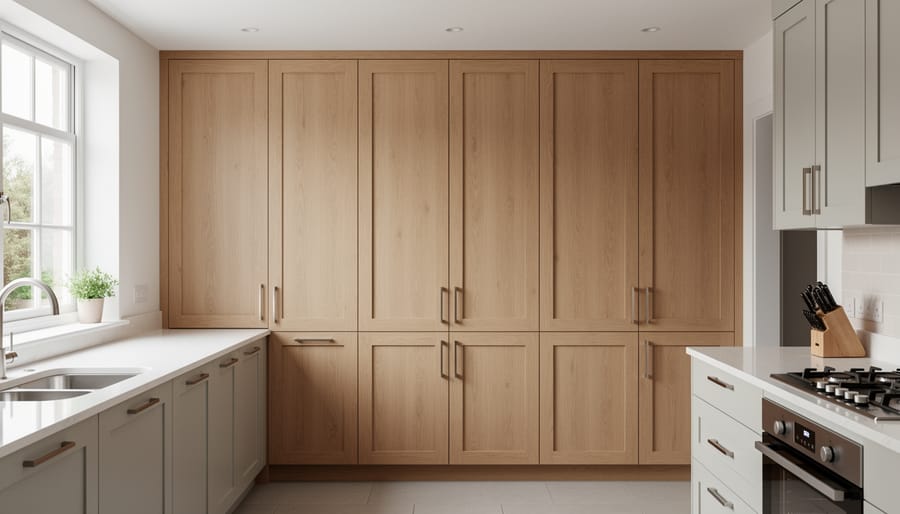
For comprehensive kitchen renovations involving structural changes, complex layouts, or whole-room transformations, Chervin Kitchen and Bath stands out with their 67,000 square foot manufacturing facility and full-service approach spanning design, fabrication, and installation. Their in-house production capacity handles intricate projects requiring custom dimensions, specialized storage solutions, and coordinated elements across large spaces. Canadian Custom Cabinets also excels at complete overhauls, having completed more than 1,500 projects since 2008, with a 3D design review process that catches potential layout issues before production begins and five-stage quality control ensuring complex installations proceed smoothly. Both providers manage the entire workflow internally, which matters when coordinating multiple trades and timeline dependencies in full kitchen renovations, particularly valuable if you’re planning to stage like a designer afterward, since quality cabinetry forms the foundation of an impressive kitchen presentation.
Best for Multi-Room Projects
When you’re renovating multiple spaces, kitchen, bathrooms, a home office, and bedroom closets, choosing a provider who handles the full range ensures continuity in materials, finishes, and design language throughout your home.
Canadian Custom Cabinets excels here with proven capabilities across kitchens, closets, vanities, home offices, and built-in storage. With over 1,500 completed projects since 2008, they’ve demonstrated the capacity to coordinate complex multi-room installations while maintaining design consistency. Their 3D design review process helps visualize how cabinetry will flow from one space to another before production begins, and their five-stage quality control ensures uniform standards across every room.
This approach delivers more than aesthetic harmony. Working with one provider means coordinated timelines, consistent communication, and the efficiency of placing one order instead of managing multiple vendors. For homeowners tackling whole-house renovations or phased projects where rooms need to complement each other, this coordination proves invaluable.
Best for Design-Conscious Homeowners
For homeowners who arrive at consultations with Pinterest boards, sketches, and a clear aesthetic vision, providers offering robust 3D design services and extensive customization flexibility deliver the best experience. Canadian Custom Cabinets stands out here with their detailed 3D design review process, which lets you visualize exactly how custom elements will look in your space before approving production. We found this approach particularly valuable for testing unconventional layouts, mixing finishes, or incorporating architectural details that standard offerings can’t accommodate. Chervin Kitchen and Bath also excels with design-focused clients, combining their in-house manufacturing capabilities with consultation services that translate specific ideas into buildable reality. The key advantage: you’re not adapting your vision to fit a provider’s limitations, instead, they’re engineering solutions to match what you actually want.
Best for Quality-Focused Buyers
For homeowners who refuse to compromise on craftsmanship, Canadian Custom Cabinets stands out with their five-stage internal quality control process and 1,500+ completed projects since 2008. Their requirement for written approval of final drawings before production begins ensures nothing moves forward without your sign-off. Chervin Kitchen and Bath offers similar quality assurance through their 67,000 square foot local manufacturing facility, where oversight happens in-house rather than being outsourced to distant workshops. We found that providers with both local manufacturing and documented quality control stages consistently deliver fewer installation issues and longer-lasting results than those relying on third-party fabrication.
Questions to Ask Before You Commit
Before signing a contract with any custom cabinet provider, you need clear answers to questions that reveal how they work, what they guarantee, and whether they match your renovation priorities. The consultation phase is your opportunity to evaluate professionalism, transparency, and whether a provider’s process aligns with your expectations.
Start by asking about their manufacturing and quality processes. Where are the cabinets manufactured, and can you visit the facility? Providers like Canadian Custom Cabinets run cabinets through five stages of internal quality control before delivery, while Chervin operates from a 67,000 square foot manufacturing space where oversight happens locally. Understanding their quality checkpoints helps you gauge how seriously they take craftsmanship.
Ask detailed questions about the design approval process. How do they present the final design, sketches, 2D drawings, or 3D renderings? Canadian Custom Cabinets, for instance, provides 3D design review before requiring written approval of final drawings, dimensions, and selections. Clarify how many revision rounds are included and what triggers additional fees. You want to know exactly when you’re locked into specifications and what flexibility remains.
Dig into the project timeline specifics. What’s the typical lead time from design approval to manufacturing completion, and when does installation happen? Ask what could delay the schedule and how they communicate if timelines shift. Some providers book installation months in advance, so understanding realistic timeframes prevents frustration.
Request clarity on what the quoted price covers. Does it include delivery, installation, hardware, and finishing? Are there standard exclusions, such as removal of existing cabinets or countertop installation? Ask about renovation insurance requirements during installation and who’s responsible if damage occurs during the process.
Finally, ask to see evidence of completed projects similar to yours. Can they show you portfolios of kitchens in homes with layouts like yours? Do they have references from recent Waterloo clients? Providers with 1,500+ completed projects should easily share examples that demonstrate their range and consistency.
How long from design approval to installation?
Typical timelines range from 8 to 16 weeks depending on complexity and provider capacity, though this varies by season and workload. Always ask for a specific timeline estimate during your consultation.
What’s included in the quote?
Most quotes cover cabinetry, hardware, and delivery, but installation, removal of existing cabinets, and finishing work may be separate line items. Clarify all inclusions and exclusions in writing before signing.
How many design revisions are allowed?
Most providers include two to three revision rounds in their design fee, with additional changes billed separately once you’ve approved the concept. Ask about this policy upfront to avoid surprises.
What happens if there’s damage during installation?
Reputable providers carry liability insurance and will repair or replace damaged units at no cost to you. Confirm their insurance coverage and damage resolution process before the project starts.
The providers who answer these questions confidently and transparently are usually the ones who run organized operations and stand behind their work. Vague responses or reluctance to share process details should raise concerns.