
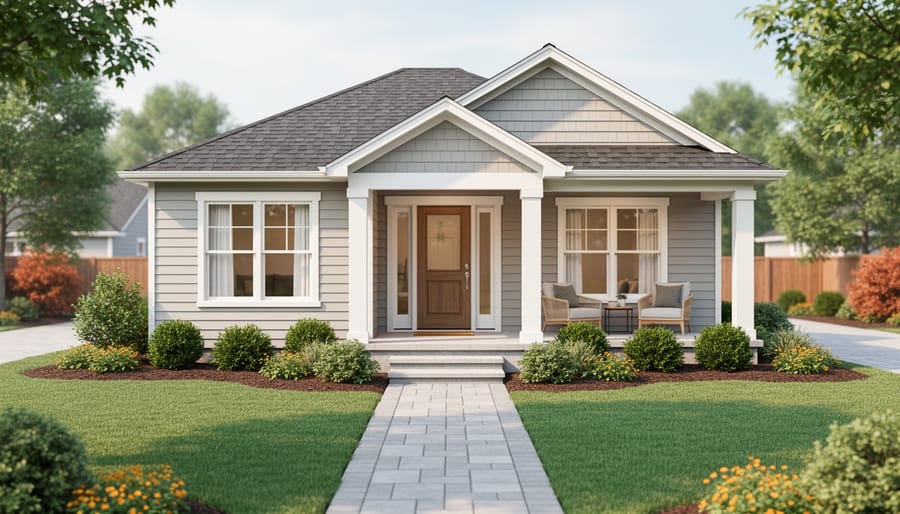
10 Business Curb Appeal Strategies for Faster Home Sales in 2026
Treating your home’s exterior as a business investment rather than a weekend project can return $1.50 to $2.00 for every dollar spent and cut market time by 30% or more. Business curb appeal means approaching front-yard improvements with the same strategic mindset you’d bring to any capital investment: tracking ROI, prioritizing high-impact changes, and making data-driven decisions about where your budget delivers the greatest return. Instead of randomly planting flowers or power-washing when you feel like it, you’ll analyze which upgrades buyers in your market value most, allocate resources based on measurable impact, and implement improvements on a timeline that maximizes sale price.
The difference shows up immediately in listing photos, where professionally planned exteriors capture attention in the first three seconds of browsing. It continues through showings, where buyers assign higher baseline value to homes that look maintained and move-in ready. This systematic approach works whether you’re preparing to sell, building long-term property value, or managing rental portfolios where tenant quality correlates directly with exterior presentation.
You don’t need a real estate license or a contractor’s expertise to apply business principles to curb appeal. You need clarity on what moves the needle in your specific market, a framework for choosing between competing projects, and accountability for the dollars you spend. The strategies ahead break down exactly how professionals evaluate, budget for, and execute exterior improvements that pay back reliably.
Why Business Curb Appeal Matters for Home Sellers
When you approach your home sale as a transaction requiring strategic preparation, curb appeal shifts from cosmetic nicety to critical business asset. Research shows buyers form opinions in seconds after arriving at a property, and those initial reactions heavily influence their entire evaluation. Whether the showing happens in person or through listing photos, the exterior creates an immediate mental price tag that’s difficult to adjust once set.
The business mindset recognizes this psychological reality and treats curb appeal as part of your marketing strategy, not maintenance. Professional real estate investors routinely allocate 1-3% of expected sale price to exterior presentation because the return consistently exceeds the investment. Homes with strong curb appeal typically sell 7-10% faster and command higher offers as competing buyers perceive them as better maintained overall.
What separates professional staging approaches from casual tidying is strategic thinking about your target buyer. Rather than simply mowing the lawn and cleaning gutters, you analyze what signals quality to your likely purchaser demographic. A young professional couple evaluates curb appeal differently than empty nesters or investors, and your improvements should align with their expectations. This means studying comparable homes that sold quickly in your neighborhood and identifying which exterior elements commanded premium pricing.
The business approach also involves measuring return on investment for each potential improvement. A fresh coat of paint on the front door might cost $150 but influence a buyer’s perception of a $400,000 home, while elaborate landscaping could run $5,000 without proportional impact. Strategic sellers make these calculations consciously rather than upgrading randomly based on personal preference or outdated conventional wisdom about what “should” be done before listing.
Selection Criteria: What Makes Curb Appeal Business-Ready
Treating curb appeal like a business investment means evaluating every potential improvement against clear criteria before you commit time or money. Not all exterior upgrades deliver equal returns, and the smartest sellers prioritize projects that match their specific property, market conditions, and timeline to sale.
Start with a simple cost-versus-impact analysis for each potential project. High-impact improvements don’t always cost the most, fresh mulch, power-washed concrete, and a painted front door typically deliver stronger visual returns than expensive landscaping overhauls. Calculate the expected increase in buyer interest or price against your actual outlay. A $300 door refresh that makes your home feel $15,000 more valuable in photos wins over a $2,000 garden renovation that buyers might replant anyway.
Your neighborhood sets the baseline expectations. Walk the street and note what well-maintained homes share: manicured lawns, matching mailbox styles, consistent fence conditions, or seasonal plantings. Matching these standards signals you’re a serious seller, while falling short raises red flags about deferred maintenance throughout the property. You don’t need the best lawn on the block, but you can’t have the worst and expect quick offers.
When evaluating which improvements make your curb appeal business-ready, apply these five criteria consistently:
- ROI potential: Will this improvement increase perceived value more than it costs?
- Time to complete: Can you finish before your target listing date without rushing quality?
- Neighborhood alignment: Does this match or slightly exceed local property standards?
- Buyer expectations: Will your target demographic notice and value this specific upgrade?
- Seasonal timing: Does this project suit current weather and the season when buyers will view it?
Your target buyer demographic shapes which details matter most. Families with young children notice safe, maintained play spaces and well-lit entries. First-time buyers respond to move-in-ready presentation that suggests low maintenance ahead. Investors calculate repair costs at a glance, so visible deferred maintenance kills deals fast.
Competition analysis matters more than sellers realize. If three similar homes are listed within two blocks, your curb appeal needs a clear edge. That might mean the only professionally staged front porch, the freshest exterior paint, or the most inviting evening lighting. Check active listings online and drive by them, then identify one improvement that makes your property photograph better than theirs.
10 Business Curb Appeal Strategies for Faster Sales
1. Professional Entry Presentation
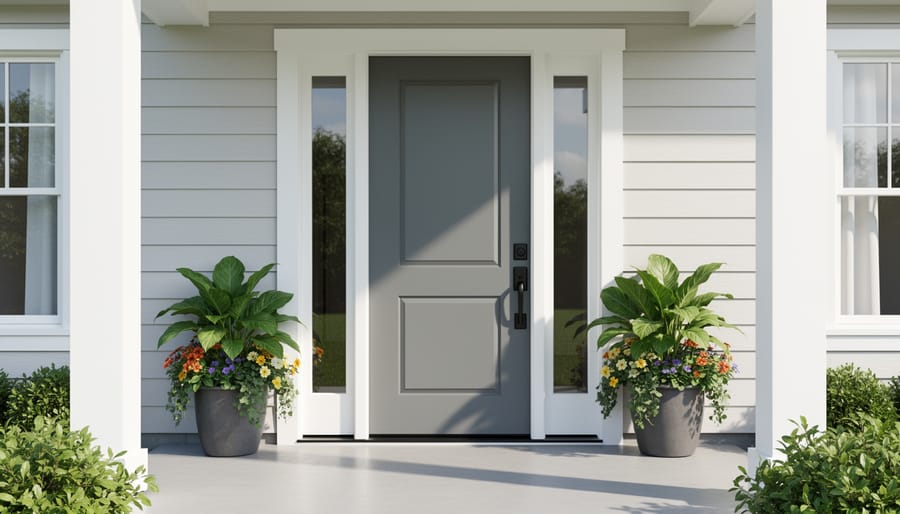
The front door is your property’s handshake with potential buyers, and a weak first impression here costs you negotiating power. A fresh coat of paint in a color that complements your home’s exterior immediately signals recent care. Black, navy, or deep charcoal work across most architectural styles and photograph exceptionally well.
Replace outdated hardware, locksets, handles, house numbers, and the doorbell, with matching finishes. Brushed nickel and matte black deliver contemporary appeal without trend risk. Add a quality doormat and consider flanking planters with seasonal greenery scaled to your entryway size.
Remove personal items like worn welcome signs or faded seasonal wreaths. The goal is creating a clean, inviting transition point that suggests the interior matches this level of attention. Buyers mentally price your entire home based on what they see in these first five seconds.
2. Strategic Landscaping for Visual Flow
Strategic landscaping serves a single business purpose: directing buyer attention to your home’s architectural strengths while minimizing distractions. This isn’t about elaborate gardens, it’s about intentional visual pathways.
Start with aggressive pruning. Overgrown shrubs blocking windows or crowding the foundation make properties appear smaller and poorly maintained. Cut foundation plantings to below windowsill height, opening sightlines that showcase your home’s facade rather than hiding it behind greenery.
Edge all beds with crisp, defined lines. Buyers register sharp borders between lawn and landscaping as evidence of ongoing maintenance, a powerful signal that extends to their perception of the entire property’s condition.
For plantings, install low-maintenance perennials in odd-numbered groupings (three or five plants) that create visual stepping stones from the street to your entrance. Choose varieties that bloom during your expected sale window, adding color at decision-making moments.
Remove anything dead, diseased, or awkwardly shaped. Buyers won’t distinguish between “character tree” and “eyesore”, they’ll just register neglect.
3. Lighting That Works Day and Night
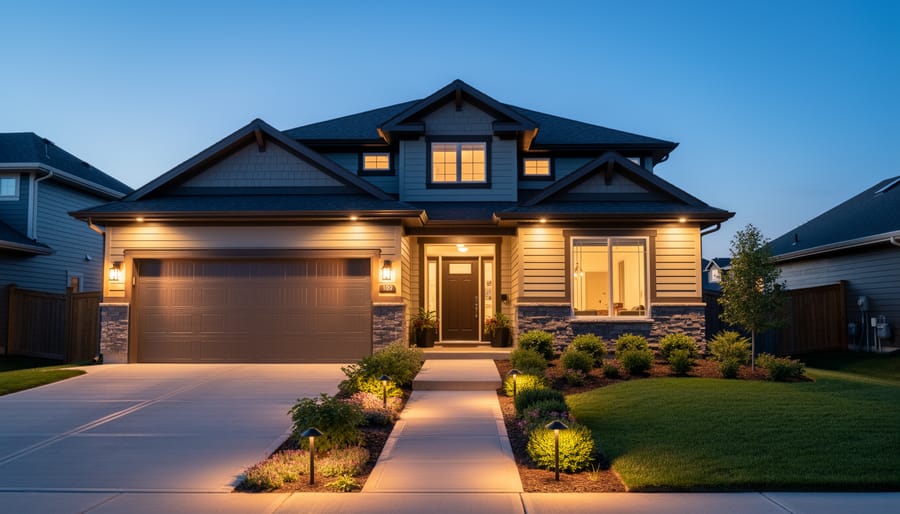
Lighting extends your curb appeal beyond daylight hours and creates emotional warmth that static staging cannot match. Install pathway lights along walkways and uplights at architectural features or mature trees, these guide buyers’ eyes and establish hierarchy in your landscape. A well-lit entry says “welcome home” during evening showings when buyers often visit after work. Replace dated fixtures with modern designs that complement your home’s style; a new porch light costs $150, $400 but photographs beautifully and signals recent updates. Add solar stakes along flower beds for affordable ambient glow. For listing photos, dusk shots with warm exterior lighting outperform daytime images in engagement metrics, your photographer needs something to capture. Strategic lighting makes your property feel safe, maintained, and move-in ready while competitors sit dark after 6 PM.
4. Driveway and Walkway Maintenance
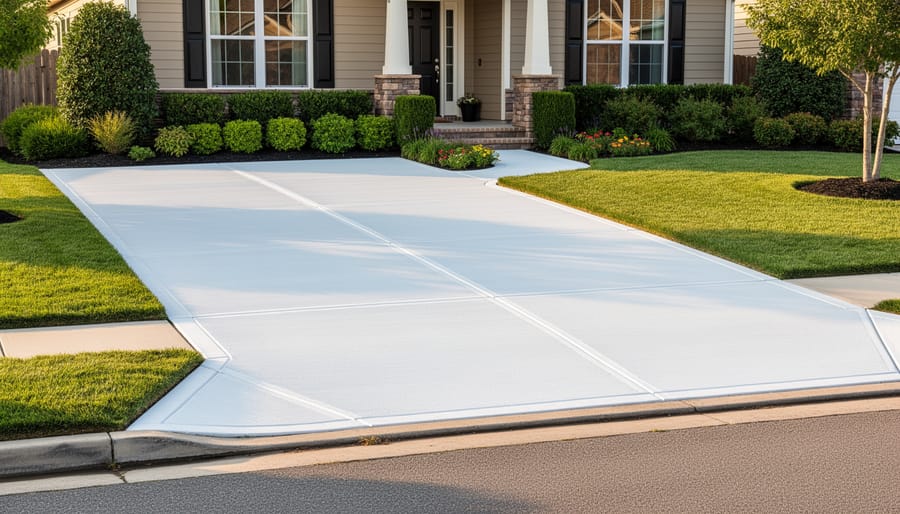
Driveways and walkways serve as literal pathways to your home, and their condition telegraphs your overall maintenance standards before buyers reach the front door. A cracked, stained, or weed-choked approach undermines even the most polished landscaping.
Power washing concrete or pavers removes years of grime, oil stains, and organic buildup in hours, often the single highest-impact improvement per dollar spent. Follow with crack filling and patching for asphalt or concrete surfaces, which prevents the “deferred maintenance” red flag that spooks cautious buyers.
Edge walkways cleanly where they meet lawn or mulch beds; crisp borders signal intentional care. Repair sunken pavers or loose stones that create trip hazards and insurance concerns. For stubborn stains, consider concrete staining or resurfacing rather than replacement if the structural integrity remains sound.
These surfaces frame every showing arrival. Clean, well-maintained pathways communicate that the entire property has received similar attention.
5. Exterior Paint and Finish Touch-Ups
A fresh coat of paint delivers one of the highest visual returns in curb appeal, but strategic touch-ups often achieve the same impact at a fraction of full-repainting costs. Focus on high-contrast elements that frame your home’s architecture: trim around windows and doors, shutters, porch railings, and decorative elements like columns or brackets. These accents draw the eye and make the entire facade appear updated.
Walk your property’s perimeter and photograph areas where paint has faded, chipped, or discolored. Peeling paint signals deferred maintenance to buyers, triggering concerns about what else might be neglected. Prioritize south and west-facing surfaces that weather fastest.
For maximum impact, choose colors that complement your neighborhood while standing out subtly. A crisp white or contrasting dark tone on trim against neutral siding creates definition in listing photos. Test paint samples in different lighting conditions before committing, colors shift dramatically between morning and afternoon sun.
Budget two weekends for preparation and application if you’re handling this yourself, or hire a painter for detail work while managing broader DIY projects elsewhere.
6. Window Presentation from the Street
Windows are your home’s eyes from the street, buyers unconsciously read them as indicators of interior care and livability. Start with spotless glass inside and out, particularly on street-facing panes where smudges and water spots kill the polished look you’re building. Clean windows catch light beautifully in listing photos and suggest meticulous maintenance throughout.
Coordinate window treatments so they present uniformly from outside. Mismatched or broken blinds signal neglect, while cohesive treatments in neutral tones create visual harmony across the facade. Open treatments during showings to maximize natural light visibility from curb.
Strategic seasonal touches add warmth without clutter, a single tasteful wreath or simple window box can soften architectural lines. Keep it understated; the goal is inviting, not busy. Clean, coordinated windows tell buyers the home has been cared for where it counts.
7. Mailbox and Address Number Upgrade
Buyers notice small details that signal whether a property has been maintained with care or allowed to deteriorate. Your mailbox and address numbers fall into this category, they’re functional necessities that also broadcast a message about the home’s overall condition.
A rusted mailbox with peeling paint or faded, misaligned house numbers suggest deferred maintenance throughout the property. Conversely, a clean modern mailbox and crisp address numbers tell buyers this home has been cared for systematically.
Replace dated brass or worn plastic mailboxes with contemporary designs that match your home’s architectural style. Modern farmhouse? Choose matte black metal. Traditional colonial? Opt for classic post-mount styles in coordinating finishes.
Address numbers deserve equal attention. Large, clearly visible numbers in a modern font (minimum four inches tall) improve curb presence while serving practical purposes for showings. Mount them directly on the house where they catch natural light, or illuminate them for evening visibility. Brushed nickel, oil-rubbed bronze, or matte black finishes typically photograph well and coordinate with most exterior color schemes.
8. Garage Door Impact
For most homes, the garage door commands 30-40% of the facade’s visible square footage from the street. A dingy, peeling, or outdated garage door broadcasts deferred maintenance louder than any other single element, and buyers notice immediately during drive-bys.
Start with a thorough cleaning: power wash to remove grime, mildew, and oxidation that dulls the finish. If the door is painted wood or steel, inspect for chips and rust spots. A fresh coat in a neutral color that complements the home’s palette costs $150-300 for materials and delivers dramatic visual lift.
Hardware upgrades offer quick wins. Replace dated handles, hinges (or decorative hinge overlays), and window inserts for $75-200. Carriage-style hardware kits transform flat doors into architectural features without replacement costs.
If the door is severely damaged or doesn’t match neighborhood standards, replacement ($800-1,500 installed) pays back in faster sales. Buyers interpret a modern, well-maintained garage door as evidence the entire property has been cared for properly.
9. Seasonal and Weather-Ready Presentation
Buyers evaluate homes differently across seasons, and smart sellers adjust their curb appeal strategy accordingly. In spring and summer, vibrant plantings and lush lawns signal move-in readiness. Fall demands leaf removal, seasonal color through mums or pumpkins, and clear gutters that prove maintenance diligence. Winter presents the toughest challenge, keep walkways clear, add welcoming touches like wreaths or evergreen planters, and ensure exterior lighting compensates for shorter daylight hours.
Weather damage tells buyers you’ve deferred maintenance. After storms, immediately clear debris, repair minor damage, and restore landscaping. In regions with harsh conditions, weatherproofing elements like sealed decks or protected entryways demonstrate smart ownership. Your curb appeal should prove the home performs well year-round, not just during ideal conditions. Seasonal adjustments cost little but signal that you’ve maintained the property through all conditions, a powerful message to serious buyers evaluating long-term value.
10. Professional Photography Staging
Most buyers will see your home online before they see it in person, which means your curb appeal needs to photograph exceptionally well. Schedule your listing photography during the “golden hour”, early morning or late afternoon when natural light is soft and warm. Remove cars from the driveway and street view, clear away trash bins and garden hoses, and stage the entry with a subtle seasonal touch like a potted plant or wreath.
Consider how your home will look in the small thumbnail images buyers scroll through. Trim any branches blocking the facade, ensure your lawn is freshly mowed with visible stripes, and add definition with edging. Professional photographers often recommend watering the lawn an hour before the shoot for enhanced color saturation and shine.
Your front yard setup should create depth and visual interest. Position outdoor furniture at slight angles rather than flat against walls, and open curtains to show warm interior lighting through windows. These details transform standard listing photos into images that stop the scroll and generate showing requests.
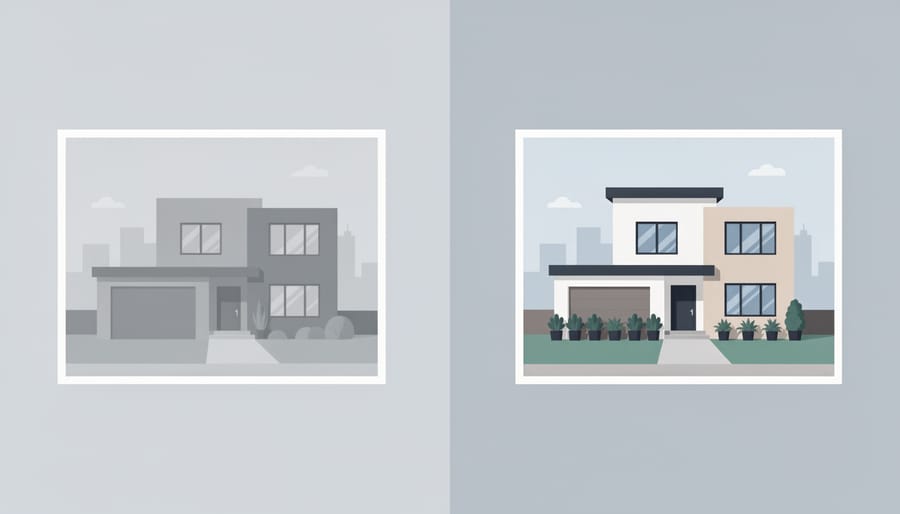
Budget and Timeline Planning
Smart curb appeal planning starts with treating your budget like a business investment, not a renovation project. The typical seller invests between $1,500 and $5,000 on exterior staging, though your specific allocation depends on home value, local competition, and current condition.
Start by calculating a target budget using the 1-3% rule: invest one to three percent of your home’s listing price in curb appeal improvements. A $400,000 home warrants $4,000 to $12,000 in strategic exterior work, while a $200,000 property might justify $2,000 to $6,000. This framework ensures your investment aligns with expected returns.
Break your budget into three tiers based on impact. High-impact essentials like professional cleaning, paint touch-ups, and landscape maintenance typically consume 50-60% of your budget. Medium-impact upgrades such as lighting or hardware improvements take 25-35%, while lower-cost finishing touches like address numbers or seasonal decor round out the remaining 10-15%.
The DIY versus professional decision hinges on time value and skill level. Professional services cost more upfront but deliver faster, more polished results. If your home sits in a competitive market where speed matters, hiring contractors accelerates your timeline from weeks to days. DIY approaches work well for maintenance tasks like weeding or cleaning but risk delays on technical work like electrical or painting.
Timeline planning should work backward from your listing date. Start six to eight weeks before listing for major work, four weeks for landscaping and painting, and two weeks for final staging details. Rush timelines compress quality and inflate costs, both bad business decisions when first impressions determine your sale price.
Common Questions About Business Curb Appeal
Most sellers approach curb appeal with similar concerns about investment, timing, and priorities. Understanding the business rationale behind common questions helps you make confident decisions that align with your sale timeline and budget constraints.
What’s the typical ROI on curb appeal investments?
Strategic curb appeal improvements typically return 100-200% of their cost in faster sales and higher offers, with entry presentation and landscaping delivering the strongest returns. The key is matching investments to your neighborhood’s price point and buyer expectations.
When should I start curb appeal improvements before listing?
Begin at least 4-6 weeks before your planned listing date to allow time for landscaping to settle, weather-dependent tasks to complete, and professional photography scheduling. Rush jobs often cost more and deliver weaker results than planned timelines.
Which improvements matter most in competitive markets?
Entry presentation, lighting, and professional landscaping create the strongest first impressions when multiple properties compete for the same buyers. These visible upgrades differentiate your listing in online photos and drive showing requests.
Should I hire professionals or tackle curb appeal myself?
Hire professionals for high-impact visible work like painting, major landscaping, and lighting installation where quality shows immediately. Reserve DIY efforts for maintenance tasks like cleaning, mulching, and minor touch-ups that don’t require specialized skills.
How much should I budget for business-level curb appeal?
Plan to invest 1-3% of your home’s value in curb appeal for competitive markets, with higher percentages for properties needing significant exterior updates. Start with the highest-impact, lowest-cost improvements and scale up based on your timeline and local competition.
Do seasonal factors affect which improvements I should prioritize?
Absolutely, spring sellers should focus on fresh landscaping and color, while winter listings need exceptional lighting and welcoming entry details to compensate for dormant gardens. Adjust your strategy to showcase your home’s best features in current conditions rather than fighting the season.
The business approach to curb appeal means treating these decisions like any investment analysis. Calculate potential return against cost, consider your specific market timing, and prioritize improvements that address buyer concerns visible in first impressions. Your real estate agent can provide local market data showing which exterior features buyers in your area value most, helping you allocate budget where it delivers the strongest competitive advantage.
items
1. Professional Entry Presentation
Your front door represents the threshold between public space and personal sanctuary, buyers judge your entire property by this transition point. Replace dated hardware with modern finishes, repaint the door in a color that complements your facade, and add a professional-grade welcome mat. Consider the sight lines: stepping back 15 feet reveals what buyers see first. A simple door refresh costs $200-500 but signals that quality continues inside.
2. Strategic Landscaping for Visual Flow
Professional landscapers design with intention, guiding eyes toward architectural strengths while softening harsh lines. Prune overgrown shrubs away from windows, edge beds with clean lines, and add seasonal color near the entry. The goal isn’t elaborate gardens but intentional framing. Strategic pruning and mulching typically runs $300-800 and creates visual pathways that make homes feel larger and more accessible.
3. Lighting That Works Day and Night
Evening showings require functional exterior lighting, while daytime photos benefit from fixtures that add architectural interest. Install pathway lights leading to the entry, upgrade porch fixtures to complement your home’s style, and ensure all bulbs match in color temperature. Quality exterior lighting ($400-1,200 installed) extends showing hours and creates warm ambiance that photographs sell.
4. Driveway and Walkway Maintenance
Cracked, stained concrete telegraphs deferred maintenance to buyers who extrapolate those concerns throughout the property. Power washing removes years of buildup for $150-300, while crack sealing and edging create crisp boundaries. If replacement is needed, concrete runs $8-12 per square foot, but surface treatments like resurfacing cost half that while delivering similar visual impact.
5. Exterior Paint and Finish Touch-Ups
Full repainting costs thousands, but targeted touch-ups on trim, shutters, and high-visibility areas refresh the entire facade for $300-700. Focus on what buyers see from the curb: front-facing trim, porch railings, and any peeling areas. Choose neutral, regionally-appropriate colors that photograph well and appeal to broad buyer demographics rather than personal preferences.
6. Window Presentation from the Street
Clean windows signal property care, while coordinated treatments create cohesive visual rhythm. Wash exterior glass ($150-300 professionally), align blinds at consistent heights, and remove window-mounted air conditioners if possible. Simple seasonal wreaths or planters on front-facing windowsills add warmth without overwhelming the architecture, buyers notice these thoughtful details.
7. Mailbox and Address Number Upgrade
These small elements communicate whether owners maintain details or let things slide. Replace rusted mailboxes ($40-150), install modern house numbers with good visibility ($30-100), and ensure both coordinate with your home’s finish palette. Postal presentation matters, buyers imagine themselves receiving mail here, and dated fixtures undermine that vision.
8. Garage Door Impact
Garage doors occupy 30-40% of many facades, yet sellers often overlook this massive visual element. Power washing removes grime ($100-200), fresh paint or stain revives wood doors ($200-400), and updated hardware adds dimension. If replacement is needed, modern insulated doors ($1,000-3,000 installed) deliver strong ROI by transforming the home’s entire street presence.
9. Seasonal and Weather-Ready Presentation
Spring sellers showcase blooms; winter sellers emphasize coziness and maintenance. Adjust your curb strategy to season: clear leaves and debris, store seasonal items like patio furniture, and demonstrate weather preparedness with clean gutters and functioning drainage. Seasonal adjustments cost minimal money but signal that the home is actively maintained year-round.
10. Professional Photography Staging
Listing photos drive 90% of buyer interest, so stage specifically for the camera. Remove cars from driveways, open front curtains, turn on interior lights visible through windows, and photograph during golden hour when natural light flatters exteriors. Professional real estate photography ($200-500) captures these staging investments and multiplies their impact across thousands of online viewers.
Treating your home’s exterior with a business mindset transforms curb appeal from decoration into strategic investment. The ten strategies we covered deliver measurable returns because they address what buyers actually notice in those critical first moments, professional presentation signals quality throughout the property and justifies asking price in competitive markets.
Every improvement you make compounds: a refreshed entry paired with strategic lighting and maintained walkways tells a coherent story of careful ownership. Buyers spend less time questioning maintenance issues and more time imagining themselves in the space. That shift accelerates decisions and strengthens offers.
The timeline matters more than perfection. Implementing even half these strategies puts your listing ahead of neighboring properties still treating curb appeal as an afterthought. Start with the highest-impact, lowest-cost fixes like address numbers and mailbox upgrades, then layer in landscaping and lighting based on your market timeline and budget.
Think of exterior staging as your sales pitch before buyers even reach the door. You wouldn’t launch a product without packaging strategy, your home deserves the same business discipline. The fastest sales happen when presentation matches price positioning from the curb inward.
Ready to create your customized curb appeal strategy? Our team provides free consultations to help you prioritize improvements for your specific property and market conditions. Contact us today to develop your business plan for faster sale results.
Leave a Reply