
How to Stage a Home for Sale with a Working Fireplace (and Make It Your Best Selling Feature)
A working fireplace can boost your home’s sale price by 5 to 10 percent when staged correctly, transforming it from a dusty architectural feature into the emotional centerpiece buyers remember long after the showing. The key is presenting your fireplace as both functional and inviting through strategic cleaning, tasteful styling, and subtle demonstration that it’s ready to use this winter.
Most sellers make the mistake of ignoring their fireplace entirely or cluttering the mantel with family photos and personal knick-knacks. Buyers need to envision themselves gathered around that fire, not look at your vacation snapshots. Before you begin staging, get a chimney repair Seminole inspection to confirm your chimney and firebox are in proper working condition, particularly if you haven’t had one recently.
The staging process itself takes just a few hours but pays dividends at every showing. You’ll deep-clean the firebox and hearth, arrange the space to suggest warmth without looking staged, and create subtle visual cues that this fireplace actually works. Think carefully stacked logs, polished tools positioned just so, and a mantel decorated with purpose rather than chaos. The result is a feature that photographs beautifully and gives buyers an emotional reason to choose your home over the identical floor plan down the street.
Why a Working Fireplace Is a Major Selling Advantage in 2026
Working fireplaces remain one of those rare features that trigger immediate buyer response. In a 2026 housing market where differentiation matters, a functional fireplace delivers something competitors can’t replicate easily, it creates an emotional connection before buyers even leave the room. When staged properly, your fireplace becomes the showstopper that makes your listing memorable among dozens of similar properties.
Modern buyers see working fireplaces as lifestyle upgrades that satisfy multiple desires simultaneously. There’s the obvious ambiance factor: flickering flames create warmth and visual interest that no amount of furniture arrangement can match. But buyers also perceive fireplaces as energy-efficiency assets, even when the reality is more nuanced. The idea of supplemental heating resonates with cost-conscious purchasers worried about utility bills.
Beyond practical considerations, fireplaces tap into deeper emotional territory. They signal cozy family gatherings, romantic evenings, and nostalgic winter memories. Buyers envision themselves living those moments in your home rather than just occupying space. A properly staged fireplace amplifies this effect tenfold, it transforms from architectural detail into storytelling device that helps buyers picture their future.
The showing experience changes completely when your fireplace commands attention as the room’s natural focal point. Instead of wandering through generic spaces, buyers pause, linger, and imagine. That extra 30 seconds of engagement at your fireplace often translates into stronger emotional investment and competitive offers.
What You’ll Need to Stage Your Fireplace
Successful fireplace staging starts with gathering the right supplies before you begin. Having everything on hand saves time and ensures you won’t compromise on presentation quality halfway through the process.
Your staging toolkit should include staging cleaning supplies specifically designed for hearth maintenance: heavy-duty vacuum with brush attachments, fireplace glass cleaner, wire brush for removing soot, grout cleaner, microfiber cloths, and odor-neutralizing spray. These products handle the tough grime that regular household cleaners can’t touch.
- Cleaning essentials: hearth vacuum, glass cleaner, soot remover, grout brush, microfiber cloths, odor neutralizer
- Decorative elements: mantel décor (mirrors, artwork, or framed prints), coordinated vases or candlesticks, artificial or fresh greenery, coffee table books
- Functional staging pieces: decorative firewood stack, brass or wrought-iron tool set, log holder or basket, fireplace screen (if needed)
- Safety equipment: working smoke detector, carbon monoxide detector, fire extinguisher (visible but stylish placement)
- Seasonal accents: pillar candles for summer staging, pinecones or branches for fall, light throws or pillows for seating area
For decorative elements, choose a cohesive color palette that complements your home’s overall staging scheme, typically neutrals with one accent color. The mantel should feel curated but not cluttered, so stick to three to five carefully chosen pieces rather than covering every surface.
Functional items like firewood and tools serve dual purposes: they signal that the fireplace actually works while adding visual warmth. Select clean, uniform logs rather than random scraps, and ensure tools look polished and intentional rather than utilitarian. Quality matters here because buyers will scrutinize these details during showings.
Safety First: Pre-Staging Inspection and Warnings
Before you arrange a single candle or place decorative logs, you need to address critical safety measures that protect both you and potential buyers. A working fireplace carries real liability during showings, and overlooking these precautions could derail your sale or worse.
Schedule a certified chimney sweep to inspect the entire system, including the flue, damper, firebox, and chimney crown. They’ll identify structural issues, blockages, or excessive creosote that must be resolved before any staging begins. This inspection report becomes documentation if questions arise during the sale process, and it often informs your repairs vs as-is decision for other home features.
Install fresh batteries in all carbon monoxide detectors within fifteen feet of the fireplace, following carbon monoxide detector guidance for proper placement. Place a working fire extinguisher on the hearth or nearby, visible but not intrusive. Buyers notice these details, and they signal responsible ownership.
Review fireplace clearance code requirements before positioning any décor, mantels typically need thirty-six inches of clearance above the firebox opening, and combustible materials must stay at least six inches from fireplace sides. Measure these distances and plan your staging within safe zones. Stylish staging means nothing if it creates a fire hazard during an open house.
Step-by-Step: Preparing and Staging Your Working Fireplace
Step 1: Deep Clean and Inspect the Fireplace
Start with a cold, completely extinguished fireplace, no warm embers, no residual heat. Remove all ash and debris from the firebox using a metal scoop and vacuum designed for fine particulates. Standard household vacuums will blow ash particles back into the room and potentially damage the motor.
Scrub the firebox walls with a stiff brush and specialized fireplace cleaner to eliminate soot buildup. For stubborn creosote stains, apply a paste of baking soda and water, let it sit for 15 minutes, then scrub vigorously. If you notice thick, tar-like creosote deposits or heavy glazing, stop and call a certified chimney sweep immediately, this indicates a fire hazard that cleaning alone won’t resolve.
Clean glass doors with ammonia-free glass cleaner or a mixture of white vinegar and warm water. Wipe in circular motions to remove smoke film without scratching. Polish the hearth surface appropriate to its material: stone needs pH-neutral cleaners, while brick tolerates trisodium phosphate solutions for deep stains.
Address lingering smoke odors by placing bowls of white vinegar or activated charcoal inside the firebox overnight. If odors persist after thorough cleaning, the chimney likely needs professional sweeping to remove the source.
Step 2: Make Minor Repairs and Updates
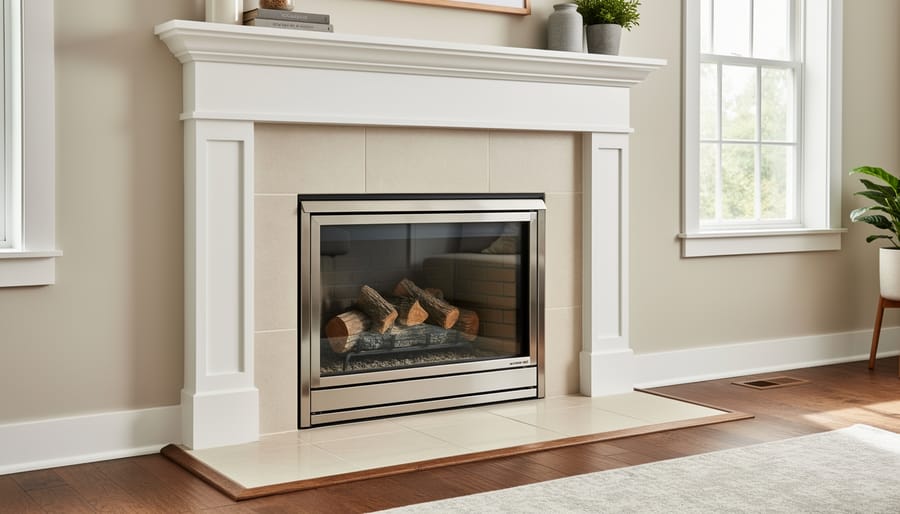
Cracked grout between fireplace tiles screams neglect to buyers. Re-grouting takes less than an hour and costs under $20, but instantly signals a maintained home. Use heat-resistant grout for areas near the firebox, matching the existing color as closely as possible. Clean out old grout first with a utility knife or grout saw before applying fresh compound.
Replace any rusted, bent, or mismatched fireplace tools. A cohesive set of matte black or wrought iron tools costs $40-80 and looks intentional. If your screen has tears or wobbly legs, swap it out, buyers notice these details during close inspection.
Brass fixtures from the 1980s date your fireplace immediately. Paint them matte black using high-heat spray paint designed for fireplace use, or replace handles and trim entirely. This update typically costs less than $50 but makes the fireplace feel current.
For painted mantels showing chips or yellowing, a fresh coat of semi-gloss white or the wall color creates a clean backdrop. Wood mantels benefit from light sanding and restaining if the finish looks worn or water-damaged.
Step 3: Stage the Firebox Interior
A completely empty firebox signals neglect, while an overstuffed one looks cluttered. Your goal is a purposeful, ready-to-use appearance that suggests both function and care.
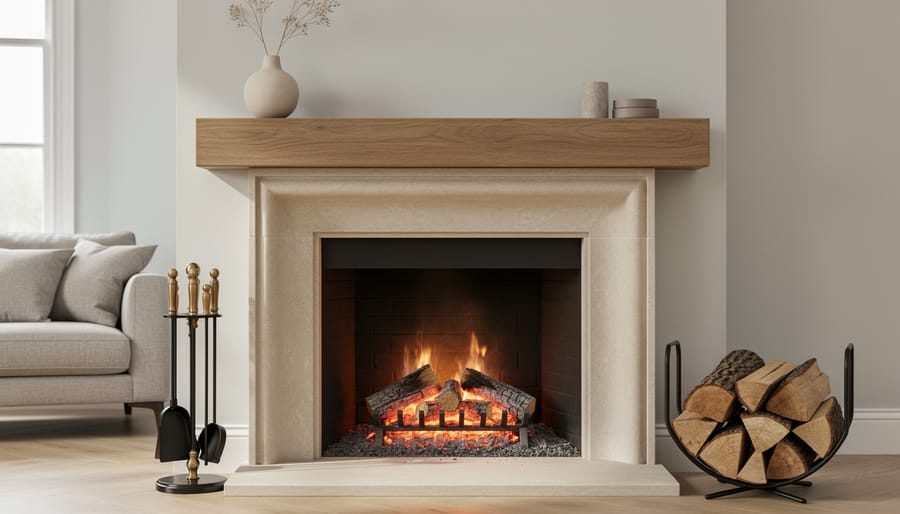
Start with fresh, split hardwood logs, no dusty, splintered pieces. Stack three to five logs on the grate or andirons in a natural, slightly loose arrangement that mimics how you’d actually build a fire. Position one or two logs diagonally rather than perfectly parallel for visual interest. Avoid geometric perfection; it should look inviting, not staged.
Never light an actual fire before showings. Smoke lingers, ash creates mess, and you can’t control when buyers arrive. Instead, arrange logs as if ready to light, with visible kindling beneath if you want to emphasize functionality.
In summer months, consider removing logs entirely and placing a decorative fire screen or a few pillar candles on a tray inside the firebox. This keeps the space fresh while maintaining visual interest. For fall and winter showings, the stacked-log approach reinforces the fireplace’s warmth potential without the liability of live flames.
Step 4: Style the Mantel
The mantel is your fireplace’s visual crown, it’s where buyers’ eyes land first, so make it count without overwhelming the space.
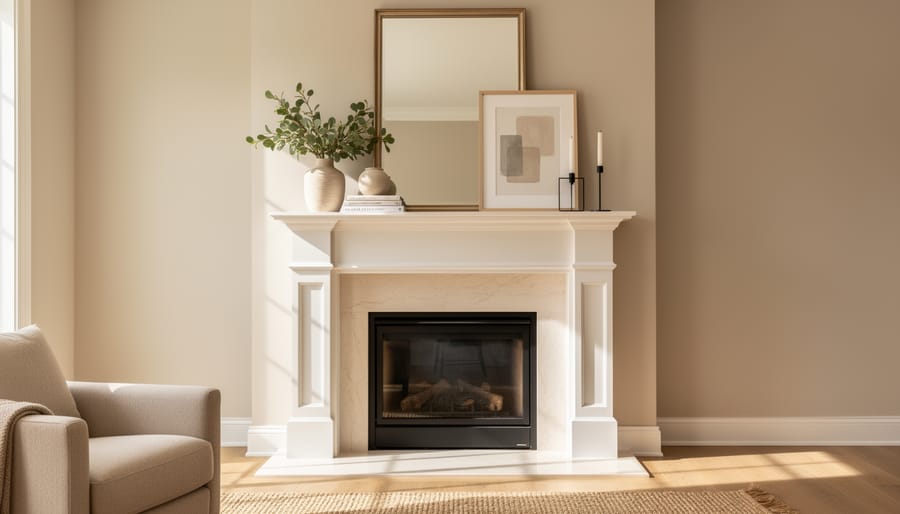
Start with a strong focal point above the mantel: a large mirror or piece of artwork centered at eye level. Mirrors are particularly effective because they reflect light and make rooms feel larger, while neutral artwork adds sophistication without personal bias. Keep the frame simple and the subject matter universally appealing, landscapes, abstracts, or architectural prints work well.
Build visual interest through height variation. Place taller items like candlesticks or vases at the outer edges, then layer in progressively shorter objects moving inward. This creates a pleasing triangle effect that draws the eye upward. Three to five items total is the sweet spot; more than that reads as cluttered during showings.
For symmetry versus asymmetry, trust your fireplace’s architecture. Traditional mantels with formal surrounds benefit from balanced pairs, matching candlesticks or identical potted plants flanking your focal point. Modern fireplaces can handle more relaxed, asymmetrical arrangements.
Keep décor neutral and seasonal-appropriate: white candles, simple greenery in ceramic containers, or a few coffee-table books stacked horizontally. Remove family photos, religious items, sports memorabilia, and anything overtly personal. Buyers need to envision their belongings here, not admire yours.
Step 5: Arrange the Hearth and Surrounding Area
The hearth and surrounding area complete the fireplace staging picture, transforming your focal point from attractive to irresistible. This zone bridges the fireplace itself with the rest of the room, and poor placement here can undo all your previous work.
Position your fireplace tool set to the right or left of the firebox, never centered in front where it blocks the view. The tools should look functional but pristine, arranged in their stand with handles all facing the same direction. If your set looks worn or mismatched, replace it with a simple brushed steel or wrought iron option from any home improvement store.
A wood basket or log holder belongs on the hearth if you have space, positioned to one side rather than dead center. Stack three to five split logs neatly inside, bark side showing, with ends aligned. This signals the fireplace works while keeping the presentation tidy. Skip the basket entirely if your hearth is narrow or if it crowds the space.
Consider a hearth rug only if your hearth extends significantly into the room and the flooring looks worn. Choose a low-pile, flame-resistant option in a neutral tone that complements your staging palette. The rug shouldn’t compete visually with the fireplace or create a tripping hazard.
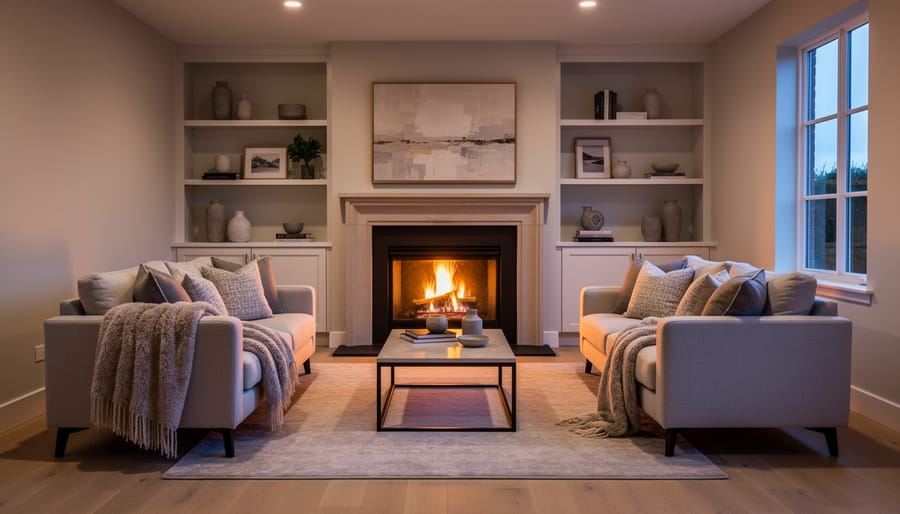
Create a subtle seating vignette that invites buyers to imagine relaxing by the fire. Position two chairs at angles facing the fireplace, pulled back far enough that they don’t obstruct the view during showings. Add a small side table between them with a coffee table book and a simple decorative object. This arrangement draws the eye to the fireplace while demonstrating how the space functions, without cluttering the sightlines buyers need to appreciate your carefully staged focal point.
Seasonal Staging Strategies for Maximum Appeal
The season when your home hits the market shapes how you present your working fireplace, but the goal remains constant: make it a memorable focal point regardless of weather.
Fall and Winter Staging
Cold-weather months are when fireplaces truly shine. Stack freshly split logs in the firebox on clean andirons, creating the immediate impression that a cozy fire is just minutes away. Position a brass or wrought-iron log holder beside the hearth filled with additional wood. On the mantel, layer warm textures: woven baskets, chunky knit throws draped artfully, and amber or cream candles in varying heights. Autumn arrangements with dried branches, wheat stalks, or subtle pumpkins work through October and November, then transition to evergreen garlands and simple pine cones for winter. Keep it elegant rather than holiday-specific so the staging stays neutral for all buyers.
Spring and Summer Staging
Warmer months require a lighter touch that maintains the fireplace’s presence without suggesting you’re trying to heat the house. Clear out logs and ashes completely, then place a decorative folding screen or a tall potted fern inside the firebox to fill the space attractively. On the mantel, switch to white or pastel candles, fresh greenery in simple vases, and mirrors or light-colored artwork that reflects natural light. A basket of white birch logs adds visual interest without heavy seasonal weight.
Quick Seasonal Swap Checklist
- Replace dark, heavy textiles with light linens when seasons change
- Swap candle colors from warm amber to crisp white or soft pastels
- Add or remove firebox logs based on temperature and showing schedule
- Adjust greenery from evergreen branches to flowering stems or succulents
- Keep mantel styling minimal, three to five pieces maximum regardless of season
Whatever the season, maintain sparkling cleanliness and ensure the fireplace remains the room’s visual anchor. Buyers should instantly imagine themselves enjoying this feature year-round, whether crackling fire or stylish focal point.
How to Verify Your Fireplace Is Show-Ready
Before any showing, walk through your fireplace check from a buyer’s perspective. Stand at the main entry points to the room and assess what catches your eye first, the fireplace should look inviting, not neglected or questionable.
Start with the smell test: cold fireplaces can trap stale smoke odors that you’ve grown nose-blind to. Ask a friend who hasn’t been in your home recently to give an honest assessment when they first enter the room. If there’s any hint of smokiness, air out the space, clean the firebox again, and place an odor absorber nearby (baking soda works well). Never try to mask fireplace odors with heavy air fresheners, buyers will assume you’re hiding something worse.
Check every visible surface for dust, ash residue, or cobwebs. Run your finger along the mantel, hearth edge, and fireplace tools. Inspect the glass doors for streaks or film, they should be crystal clear so buyers can see the clean firebox interior. Verify that your staged logs or décor haven’t shifted out of position and that the mantel styling still looks balanced and intentional.
Test the lighting at different times of day, especially if showings are scheduled for evening hours. The fireplace area should be well-lit enough to showcase details without harsh overhead glare. Table lamps or picture lights can create warm ambiance that highlights the feature.
During open houses, discreetly monitor the fireplace area. Buyers often touch mantel décor, peer into the firebox, or test fireplace doors. After groups pass through, do a quick visual sweep to ensure nothing has been moved or knocked over. Keep cleaning wipes and a small duster handy in another room so you can refresh the area between visitor waves without being obvious about it. Your fireplace should look just as pristine for the last visitor as it did for the first.
Common Fireplace Staging Questions Answered
Should you light the fireplace during showings?
Light the fireplace only for scheduled viewings in cold weather, never for open houses with unattended foot traffic. A lit fire creates powerful emotional appeal and demonstrates functionality, but requires constant supervision and proper ventilation. For most showings, stage the firebox with neatly arranged logs on the grate, buyers understand it works without the liability concerns of active flames.
How do you eliminate persistent fireplace odors?
Deep-clean the firebox and chimney, then place an open box of baking soda inside the firebox between showings to absorb residual smoke smells. If odors persist after professional chimney cleaning, check for water damage or creosote buildup that may require remediation. Never mask fireplace odors with strong air fresheners, which signal problems to buyers rather than solving them.
What if your fireplace surround looks dated?
Budget options include painting brick with heat-resistant paint in contemporary colors or adding a simple wooden mantel to frame outdated tile. For significant updates, tile overlays or stone veneer can modernize the look without full demolition, check staging before-after examples to see how surround updates impact perceived value.
Does gas versus wood-burning matter for staging?
Both appeal to buyers, but emphasize different benefits: gas fireplaces showcase convenience and cleanliness, while wood-burning units highlight authenticity and ambiance. Stage gas units with decorative logs arranged naturally and controls accessible, wood-burning fireplaces with quality stacked firewood nearby and gleaming tools displayed.
What are the most cost-effective staging improvements?
Professional chimney cleaning, fresh mantel styling with borrowed or inexpensive décor, and strategic lighting deliver maximum impact for minimal cost. A $200 cleaning and $50 in candles and greenery transforms most fireplaces more effectively than expensive renovations.
Should you stage a non-working fireplace differently?
Convert non-functional fireplaces into decorative focal points with stacked birch logs, candle arrangements, or potted plants inside the firebox. Always disclose non-working status to avoid buyer disappointment, but styled properly these still add visual appeal and architectural interest.
The key to successful fireplace staging lies in addressing these common concerns before buyers raise them, ensuring your working fireplace becomes a confident selling feature rather than a source of questions.
A well-staged working fireplace doesn’t just catch buyers’ eyes, it captures their imagination and creates the emotional connection that drives competitive offers. The hours you invest in cleaning, styling, and perfecting this feature pay dividends when potential buyers linger in your living room, envisioning cozy winter evenings in their new home.
Every detail matters, from the spotless firebox to the thoughtfully arranged mantel. If you’re uncertain about any aspect of staging or simply want professional guidance to maximize your home’s appeal, consulting with experienced stagers can provide targeted recommendations specific to your fireplace and overall property presentation.
Your working fireplace is more than a functional feature, it’s a lifestyle promise. Make it count, and watch it transform casual viewers into serious buyers ready to make their best offer.
Leave a Reply